Tropical America · hardwood
Curupay
Anadenanthera macrocarpa, Leguminosae
Also sold as: Angico preto, Cebil, Cebil colorado, Curupay-atá
Read the practical guide to CurupayJanka hardness
3,840 lbf
Harder than 99% of the 571 species with a laboratory test.
At a glance
- Janka hardness
- 3,840 lbf
- Chudnoff 1984, Tropical Timbers of the World (AH-607)
- Density
- 66.0 lb/ft³
- Chudnoff 1984, Tropical Timbers of the World (AH-607)
- Volumetric shrinkage
- 12.0%
- Chudnoff 1984, Tropical Timbers of the World (AH-607)
- Availability · editorial
- Rarely traded
Working characteristics: The timber is difficult to work on account of its hardness, severe blunting effect on cutting edges. Chudnoff — Tropical Timbers of the World (1984), AH-607
Shrinkage is green to ovendry, not seasonal movement. Availability is an editorial guide, not a stock check.
Sourced wood and tree images
Each image names its author, its licence, and the page it came from.
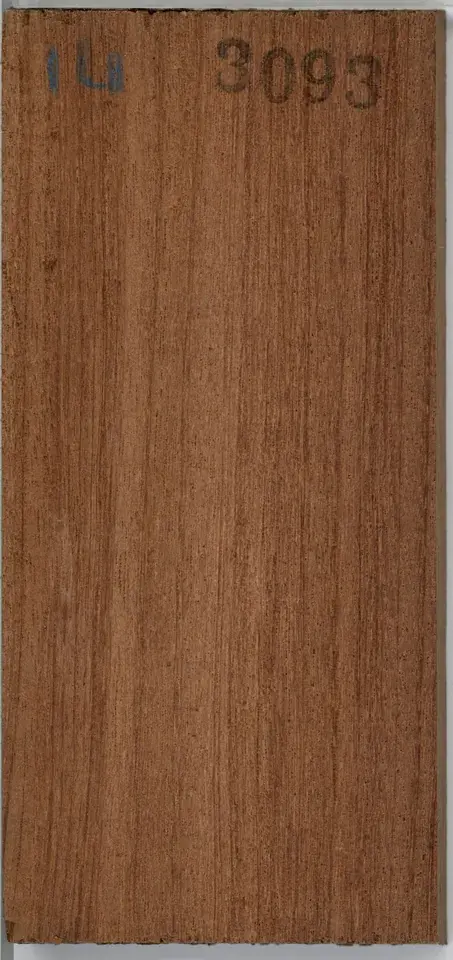
Woodgenus, not this speciesCirad · Public domain · Cirad xylothèque via Wikimedia Commons 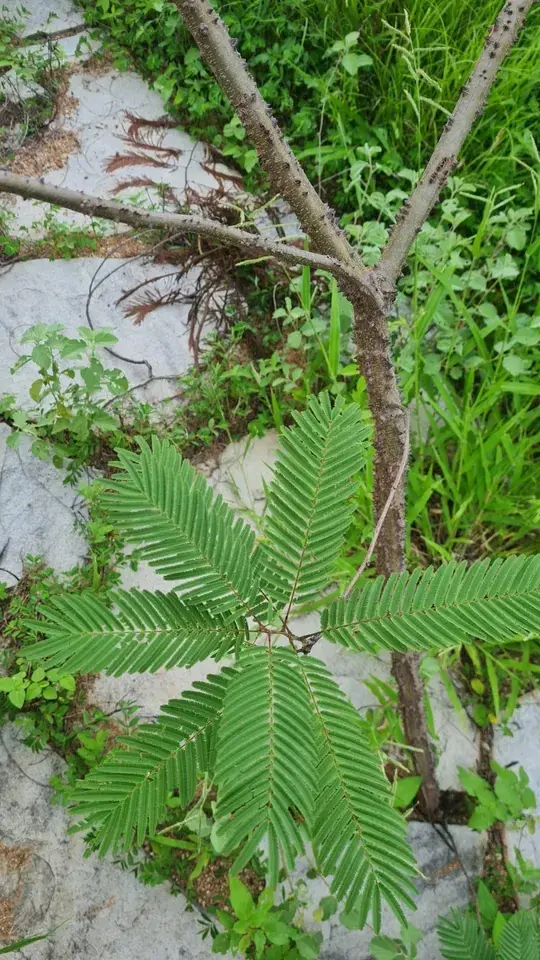
TreeTiago Lubiana · CC0 · Wikidata via Wikimedia Commons


Geographic distribution
Where it grows
Recorded distribution of Anadenanthera macrocarpa. Native areas are part of its natural range; introduced areas are places where it has been brought by people.
Loading world map…
Native range (10 regions)
Argentina Northeast · Argentina Northwest · Bolivia · Brazil Northeast · Brazil South · Brazil Southeast · Brazil West-Central · Ecuador · Paraguay · Peru
Introduced range (0 regions)
No regions recorded in this dataset.
Shading marks botanical regions with recorded presence, not the exact extent of forests or commercial plantations. Large countries may be divided into states or provinces. Extinct and doubtful records are excluded. Unshaded areas have no record in this dataset; they do not prove absence.
Source: Kew species record · WCVP, version 16 (June 2026), Royal Botanic Gardens, Kew, CC BY 3.0. Map boundaries: TDWG / WGSRPD; adapted to a world map.
Measured properties
Dry-wood properties are shown for comparison; published moisture conditions can differ between sources. Shrinkage is from green to ovendry, not seasonal movement. Actual properties in service vary.
- Janka hardness
- 3,840 lbf
- Density at 12% MC
- 66.0 lb/ft³
- Specific gravityestimate
- 1.00
- Modulus of rupture
- 29,290 lb/in²
- Modulus of elasticity
- 2.60 ×10⁶ lb/in²
- Crushing strength
- 14,100 lb/in²
- Radial shrinkage
- 4.6%
- Tangential shrinkage
- 7.6%
- Volumetric shrinkage
- 12.0%
Chudnoff 1984, Tropical Timbers of the World (AH-607)
Chudnoff 1984, Tropical Timbers of the World (AH-607)
USDA Wood Handbook 2021 (FPL-GTR-282) eq. 4-9
Chudnoff 1984, Tropical Timbers of the World (AH-607)
Chudnoff 1984, Tropical Timbers of the World (AH-607)
Chudnoff 1984, Tropical Timbers of the World (AH-607)
Chudnoff 1984, Tropical Timbers of the World (AH-607)
Chudnoff 1984, Tropical Timbers of the World (AH-607)
Chudnoff 1984, Tropical Timbers of the World (AH-607)
Where these numbers come from
Check the references below to see which properties each source supports.
- Chudnoff 1984, Tropical Timbers of the World (AH-607)
Botanical family · Janka hardness · Basic specific gravity · Density · Bending strength · Stiffness · Crushing strength · Shrinkage
- USDA Wood Handbook 2021 (FPL-GTR-282) eq. 4-9
Specific gravity
One value on this page is an estimate. Estimates use the specific-gravity conversions or regressions identified in the source records. An estimate is not a test result. Each one carries a mark.
Curupay wood: a practical guide
Curupay (Anadenanthera macrocarpa) is listed as a hardwood from Tropical America. The source descriptions below explain its appearance, working characteristics, and documented uses where those have been published. Use this guide to connect that evidence to buying stock, choosing a project, and planning the work.
Species and group descriptions are attributed below. Practical recommendations explain how to use the available evidence; they are editorial guidance. Estimates and missing properties remain identified. Historical uses describe the source’s publication period.
What is Curupay?
The botanical name used by this record is Anadenanthera macrocarpa, in the Leguminosae family. Other names recorded here include Angico preto, Cebil, Cebil colorado, Curupay-atá.
Historical source excerpt · Chudnoff — Tropical Timbers of the World (1984), AH-607 · public domain
Source profile: Anadenanthera macrocarpa
Has a wide distribution in Argentina and is also found in the subtropical and dry forests of Brazil and Paraguay.
Common names can vary between countries and suppliers. For a restoration, repeat order, or technical specification, keep the botanical name and the supplier’s description with the material record.
A broad region describes this database entry, not the origin of the board offered for sale. Verify the shipment’s origin and sourcing documents if these affect your purchase. A description in an older timber reference also does not establish present-day availability.
General workshop reference: USDA Wood Handbook (public domain)
Color, grain, and choosing visible boards
The attributed descriptions below are a starting point for recognizing color and grain. Compare them with clean, freshly surfaced stock; oxidation, drying, lighting, and a coating can all change what a sample looks like.
Historical source excerpt · Chudnoff — Tropical Timbers of the World (1984), AH-607 · public domain
Source profile: Anadenanthera macrocarpa
Heartwood pale brown, darkening on exposure to reddish brown with darker colored, almost black, streaks; sapwood yellow brown or light pink. Texture fine and uniform; grain usually irregular and interlocked; without distinctive odor or taste.
For visible work, buy the boards as a set. Decide whether changes between sapwood and heartwood are welcome, and lay out adjacent parts before cutting. A small attractive sample may not show the range of color or figure in a full order.
- Color match: evaluate the actual faces that will be visible, with the intended finish on a spare piece.
- Grain direction: follow the fibers through narrow parts, joints, and curved shapes; decorative figure can complicate cutting.
- Soundness: check both ends and faces for splits, decay, loose knots, and defects that reduce usable length.
General workshop reference: USDA Wood Handbook (public domain)
Hardness, weight, and strength in practice
Each property answers a different question. Janka side hardness compares indentation resistance, density helps with handling weight, stiffness relates to deflection, and bending strength concerns failure. None can stand in for all the others.
- Janka hardness: 3,840 lbf.Source: Chudnoff 1984, Tropical Timbers of the World (AH-607) (public domain).
- Density: 66.0 lb/ft³.Source: Chudnoff 1984, Tropical Timbers of the World (AH-607) (public domain).
- Bending strength: 29,290 lb/in².Source: Chudnoff 1984, Tropical Timbers of the World (AH-607) (public domain).
- Stiffness: 2.60 ×10⁶ lb/in².Source: Chudnoff 1984, Tropical Timbers of the World (AH-607) (public domain).
- Compression parallel to grain: 14,100 lb/in².Source: Chudnoff 1984, Tropical Timbers of the World (AH-607) (public domain).
Uses and project selection for Curupay
The source’s use list records applications reported when that reference was compiled. It can suggest where the material has been useful, but each finished product still needs stock, construction, and specifications suited to the job.
Historical source excerpt · Chudnoff — Tropical Timbers of the World (1984), AH-607 · public domain
Source profile: Anadenanthera macrocarpa
Used for heavy exterior construction and marine work, flooring, railroad crossties, tool handles, turnery. The bark is extracted for its tannin.
Surface hardness is a reason to compare this wood for wear, while allowing for greater cutting effort. Make trial cuts and pilot holes before machining or fastening the finished parts.
Based on the recorded density, weight deserves early attention for a large top, door, or portable object. Include the base, hardware, and lifting requirements in the design.
- Furniture and cabinetry: check visible color, grain at joints, stiffness for spans, and room for solid panels to move.
- Wear surfaces: compare measured hardness and the complete flooring or worktop specification, including coating and maintenance.
- Small turned or carved objects: inspect the blank’s soundness and make a cutting trial before choosing a thin profile.
- Outdoor or wet service: require decay-resistance and exposure evidence, together with drainage, hardware, and treatment details where applicable.
General workshop reference: USDA Wood Handbook (public domain)
Sawing, planing, routing, and drilling
Use the published working description below to plan the first trial. The following steps are general workshop recommendations; they are not a tested feed-rate schedule for this species.
Historical source excerpt · Chudnoff — Tropical Timbers of the World (1984), AH-607 · public domain
Source profile: Anadenanthera macrocarpa
The timber is difficult to work on account of its hardness, severe blunting effect on cutting edges. In planning a cutting angle of 10 to 15 degrees is suggested to prevent tearing of irregular grain.
- Start with sound stock: locate checks, short grain, and other defects before holding the work or setting the cut.
- Plane a trial face: read the grain and begin with a light pass. If grain reverses or tears, adjust the cut and consider scraping or sanding rather than repeatedly cutting deeper.
- Check heat and rubbing: sharp, clean cutters and a suitable feed help. Investigate burn marks instead of forcing a cut; follow the machine and cutter instructions.
- Back up exit edges: use suitable support when drilling or machining joints to reduce breakout. Trial-fit joinery before glue-up.
- Test fasteners: size pilot and clearance holes for the actual screw and stock. Dense material may split near an end, while softer material may crush beneath a fastener.
- Inspect the surface: use raking light to find machining marks, sanding scratches, and glue contamination before coating.
General workshop reference: USDA Wood Handbook (public domain)
Drying, shrinkage, and seasonal movement
Recorded green-to-ovendry shrinkage: radial 4.6%; tangential 7.6%; volumetric 12.0%. Source: Chudnoff 1984, Tropical Timbers of the World (AH-607) (public domain). These describe drying over a much wider moisture range than a typical finished interior piece experiences.
Tangential shrinkage is about 1.7 times radial shrinkage, calculated from the published values. Growth-ring orientation therefore belongs in the selection of a wide panel. The ratio describes directional differences; it does not measure the total seasonal movement or prove that a board will remain flat.
Bring stock close to the conditions in which the finished object will live before final sizing and assembly. Check moisture with a meter used according to its instructions and the appropriate species correction. Kiln-dried does not mean that the wood is at the right moisture content for every room or climate.
- Wide tops: choose attachments that permit cross-grain movement, such as correctly installed clips or screws in appropriately oriented slots.
- Frame-and-panel work: allow the panel to move within the frame, following the chosen construction method.
- Freshly sawn lumber: use a drying schedule appropriate to the material and thickness; the shrinkage table is not a kiln schedule.
General workshop reference: USDA Wood Handbook (public domain)
Gluing and assembly
Prepare sound, properly fitted surfaces and make a complete dry assembly before spreading glue. Choose an adhesive for the intended exposure and follow its requirements for moisture, temperature, open time, pressure, and cure.
A species description that mentions natural oils, extractives, or difficult bonding is a reason to verify the adhesive system on the actual stock. Do not assume that sanding finer or wiping with an arbitrary solvent will solve an adhesion problem. Use the adhesive manufacturer’s preparation guidance.
Clamp pressure should close a well-made joint. If it takes excessive force to bring the pieces together dry, correct the fit or the stock first. Remove glue contamination before finishing and check corners, shoulders, and exposed end grain.
General workshop reference: USDA Wood Handbook (public domain)
Finishing, staining, and surface preparation
Choose the finish for the object’s use and the appearance you want. A clear coating reveals natural variation; a stain can emphasize differences in absorption. A decorative object, dining table, and exterior component need different protection and maintenance.
Do not infer finishing behavior from color or density alone. Open pores may influence the desired surface texture, while uneven absorption may complicate a uniform stain. Confirm the treatment on an offcut rather than selecting a pore filler, conditioner, or sealer by habit.
- Prepare consistently: remove marks from each sanding stage and inspect under raking light.
- Sample the whole system: reproduce the sanding, any color treatment, and the topcoat on stock from the project.
- Include end grain: test it when it will remain visible, since it can take color differently from the face.
- Check the result in use: allow the sample to dry and cure as directed, then examine it in the intended lighting.
General workshop reference: USDA Wood Handbook (public domain)
Decay resistance, exposure, and care
Read the source’s durability statement with its scope in mind. Heartwood, sapwood, resistance to a particular insect, and performance in a particular test are different things. An older durability report is useful background, not a service-life warranty.
Historical source excerpt · Chudnoff — Tropical Timbers of the World (1984), AH-607 · public domain
Source profile: Anadenanthera macrocarpa
Heartwood is rated as very durable.
For interior pieces, follow the coating’s cleaning instructions and deal with spills promptly. Persistent dampness, trapped water at joints, and an unsuitable indoor humidity range need attention even when the surface appears well finished.
For exterior work, choose a documented material or product for the exposure. Provide drainage, avoid water-trapping pockets, and use compatible hardware. Ground contact and marine exposure demand more than a general statement that a timber is durable.
General workshop reference: USDA Wood Handbook (public domain)
Buying Curupay: a practical checklist
Price depends on the usable stock, not just a species name. Thickness, clear lengths, figure, color selection, drying, surfacing, quantity, and supply all affect the value of a quote. Compare like-for-like dimensions and include machining waste.
For an unfamiliar species or a large order, start with a sample and a small trial. Keep the supplier’s identification, stock condition, and sourcing information with the job so you can explain or repeat the choice later.
- Identity: confirm the botanical name and whether the shipment is a mixture or a single species.
- Moisture: ask about drying history and check the stock against the intended application.
- Usable dimensions: allow for flattening, trimming, checks, knots, and defects around the parts you need.
- Appearance: inspect the actual lot together if matching pale faces, heartwood color, or figure matters.
- Specification: obtain appropriate grade or product evidence for structural or demanding service.
- Supply and origin: check the actual shipment’s documentation; a reference-book entry does not prove current availability or permission to trade.
General workshop reference: USDA Wood Handbook (public domain)
Dust, food contact, and care
The dedicated occupational-source dataset has no reaction report linked to this entry. Historical descriptions may discuss additional handling concerns. An absent report does not establish that dust is harmless or that the wood is suitable for food contact. Use appropriate dust control and follow the controls for the tools and materials you use.
For a cutting board, utensil, or other food-contact object, confirm the material’s identity and history separately from its hardness. Unknown treatments, coatings, decay, and hard-to-clean defects can rule out a piece that otherwise looks attractive.
- Adhesive and finish: select products intended for the application and observe the manufacturer’s curing instructions.
- Cleaning: USDA advises washing cutting boards with hot, soapy water, rinsing, and drying after use. Keep raw-meat preparation separate from ready-to-eat foods.
- Condition: replace cutting boards when wear or grooves make them difficult to clean. Follow the care instructions for the construction; laminated boards can split in a dishwasher.
Comparing alternatives
The nearby measured-hardness values below help put dent resistance in context. Use appearance, movement, machining, supply, and exposure evidence to decide whether a different species is a practical substitute.
| Wood | Janka | Density |
|---|---|---|
| CurupayAnadenanthera macrocarpa | 3,840 lbf | 66.0 lb/ft³ |
| IpeTabebuia spp., lapacho group | 3,680 lbf | 70.0 lb/ft³ |
| CumaruDipteryx odorata | 3,415 lbf | 66.8 lb/ft³ |
| Indian rosewoodDalbergia latifolia | 3,170 lbf | 53.0 lb/ft³ |
Before you build
- Confirm the species and the usable dimensions of the stock.
- Check the properties that matter to the part, including any estimates or gaps.
- Match moisture to the intended environment and allow cross-grain movement.
- Make representative cutting, bonding, and finishing trials.
- Keep the approved sample, product details, and care instructions with the job.
Sources and further reading
Quoted descriptions retain the source’s scope and historical context. General workshop advice draws on the Wood Handbook; it is not a claim that every operation or application has been tested on this species. Figures above retain the property record’s named sources and licences.
- Chudnoff — Tropical Timbers of the World (1984), AH-607
Anadenanthera macrocarpa · species description · public domain. Historical descriptions compiled from published literature; uses and durability reports describe the material studied, not a current product approval.
- Chudnoff 1984, Tropical Timbers of the World (AH-607)
public domain. Supports: family, janka lbf, janka n, specific gravity basic, density kg m3, mor psi, moe mpsi, crushing psi, shrinkage.
- USDA Wood Handbook 2021 (FPL-GTR-282) eq. 4-9
public domain. Supports: specific gravity 12.
- USDA FPL — Wood Handbook (2021)
Public domain. Chapters on moisture, mechanical properties, fastenings, design, bonding, drying, decay, preservation, and finishing provide the general workshop background.
- USDA FSIS — Cutting Boards
Public domain. Cleaning, cross-contamination prevention, and board replacement.
Compare before you choose
See how Curupay and Ipe differ in hardness, density, strength, and shrinkage, with sources alongside the values.
Compare Curupay with IpeWoods of similar hardness
A substitute must match more than hardness. Compare the shrinkage and the stiffness before you change species.
| # | Wood | Janka | |
|---|---|---|---|
| 1 | Bluewood | 3,860 lbf* | |
| 2 | CocoboloDalbergia retusa | 3,860 lbf* | |
| 3 | Jatobá / jutaí-do-campo | 3,792 lbf | |
| 4 | Blackbead ebony | 3,749 lbf* | |
| 5 | Mulga | 3,749 lbf* | |
| 6 | Pani | 3,749 lbf* |